


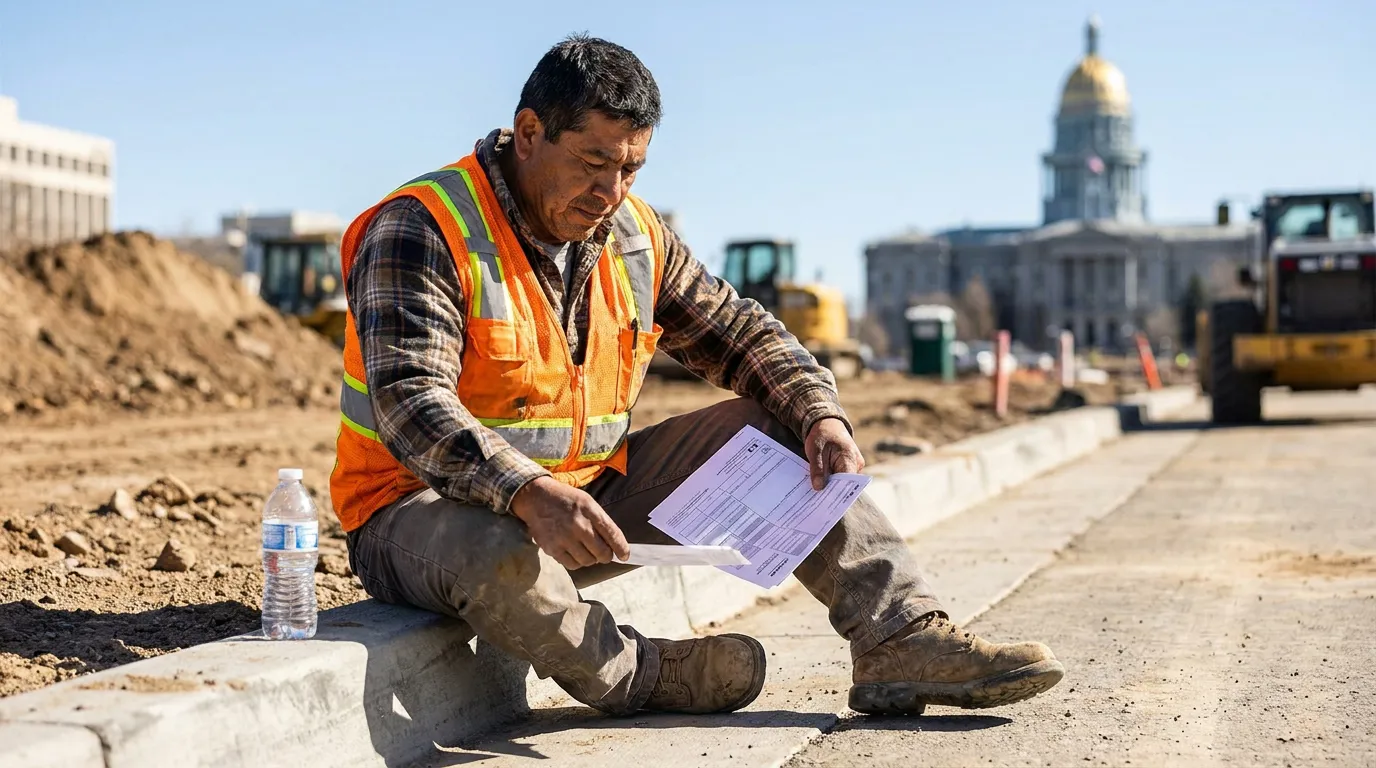
Colorado’s 2026 Wage Claim Expansion Opens New Doors for 1099 Overtime Recovery
Key Takeaways: Colorado has strengthened its wage enforcement tools for 2026, giving workers labeled as independent contractors clearer paths to recover unpaid pay. Misclassified 1099 workers may be owed back wages, and federal law can add liquidated damages that double the amount recovered unless the employer shows it acted in good faith. The state’s free wage complaint process through the Division of Labor Standards and Statistics remains a foundational tool. A recent Colorado Supreme Court ruling confirmed that most wage claims carry a two-year deadline, or three years for willful violations. Colorado’s 2026 minimum wage sits far above the federal rate, which shapes how unpaid wage claims are calculated. Outcomes always depend on the specific facts of each worker’s situation.
Workers across Colorado who were handed a 1099 instead of a W-2 are paying closer attention to their pay stubs in 2026. Many perform the same daily work as regular employees, follow company schedules, and use tools their boss provides, yet they receive no overtime when they cross 40 hours in a week. If you live or work in Colorado and feel your "independent contractor" label does not match your real job, recent legal developments may matter to you. This article breaks down what is changing and how it could affect your right to unpaid pay.

Why Colorado’s Wage Enforcement Landscape Is Shifting
Colorado has long been viewed as a worker-friendly state when it comes to wage protection. The state sets its own rules that often go beyond the federal floor, and that layered approach gives workers more than one way to seek relief. According to legal resources on state wage rules, when a state offers more rights than federal law, workers are generally entitled to the protections most beneficial to them.
A central piece of this system is the state’s free complaint process. Colorado’s Division of Labor Standards and Statistics assists employees performing work in the state with recovering earned pay that was not provided under Colorado wage and hour law. This service is free and available to current and former private-sector employees, regardless of immigration status. That accessibility is one reason the state’s enforcement framework matters so much for people who cannot afford to wait.
Misclassification sits at the heart of many of these disputes. Being handed a 1099 does not automatically make you an independent contractor under the law. If you want to understand how courts and agencies weigh the details of your working relationship, it helps to review how the rules treat misclassified 1099 workers overtime claims before you act.
The Court Ruling That Set the New Baseline
A recent decision from Colorado’s highest court reshaped how long workers have to bring wage claims. On September 15, 2025, in By the Rockies v. Perez, the Colorado Supreme Court rejected arguments that Minimum Wage Act claims should be governed by the state’s six-year general debt deadline. Instead, the court aligned these claims with a shorter window.
The ruling confirmed a two-year statute of limitations for wage claims, with a three-year period for willful violations. This brings Colorado in line with federal standards under the Fair Labor Standards Act. You can read more analysis of this development in reporting on the Colorado wage claim deadline decision, which explains how the court narrowed the available filing window.
These deadlines matter, but courts generally read exceptions to them narrowly. Tolling or delayed-discovery arguments may apply in limited circumstances, and they are not automatic. Because civil filing deadlines and administrative claim timelines can differ, workers who wait too long may lose otherwise valid claims, subject to fact-specific exceptions.
A Colorado Worker’s Story: When a 1099 Hides Real Overtime
Consider a delivery driver in Colorado who signed on as an "independent contractor" but works six days a week on routes the company assigns. She drives a company-branded van, wears a required uniform, and cannot turn down deliveries without penalty. Despite regularly logging 55 hours a week, she receives a flat daily rate and no overtime premium.
Under the worker-protective factors that courts may consider, her situation looks a lot like employment. The company controls her schedule, provides her tools, and depends on her ongoing work as a core part of its business. These are the kinds of details that often signal employee status, though the final answer always depends on the full set of facts.
How the Numbers Can Add Up
When a worker like this is properly classified, the value of a claim can grow quickly. Unpaid overtime, back pay, and additional penalties may all come into play. Guidance on Colorado wage claims explains that unpaid minimum wage is often calculated by taking the difference between what a worker was paid and what they should have earned, multiplied by the hours worked.
Federal law can also add liquidated damages equal to the unpaid amount. A court may reduce or deny these damages, however, if the employer proves it acted in good faith and had reasonable grounds to believe it was complying with the law. When they are awarded, that means $2,000 in unpaid overtime could turn into $4,000 in total recovery. For a fuller breakdown of how these amounts are estimated, resources on the worth of an unpaid wage claim walk through common scenarios, though every case varies.
What Misclassified Workers Should Know About Filing
The state agency acts as a neutral party rather than an advocate for either side. The Division investigates and determines whether violations of Colorado wage and hour law occurred, then sends the employer a letter explaining the complaint and the amounts alleged to be owed. This notice-and-response process gives employers a chance to respond before penalties attach.
Employers who ignore that notice can face added consequences. If an employer fails to pay amounts owed by the 14th day of the notice, the Division may assess penalties for late payment that become payable to the worker. Colorado law also provides penalties when a final paycheck is not delivered on time, which can increase the total value of a claim.
Transparency is built into the system, too. Under Colorado law (HB25-1001), the Division publishes on its website the names of all employers found to be in violation of wage laws, along with whether the violation was willful, upon the Division’s finding of a violation. That openness supports accountability for repeat offenders.
Here are common signs that a 1099 label may not hold up:
- The company sets your hours, routes, or daily tasks
- You use equipment, vehicles, or software the company provides
- Your work is a regular, ongoing part of the business
- You cannot realistically work for competitors at the same time
- You are paid a flat rate with no overtime past 40 hours
No single factor decides the question, and results depend on the whole picture. Colorado’s approach tends to favor workers compared with many other states, a point explored in more detail in this look at Colorado Wage Act overtime protections. Reviewing your own facts against these signals is a useful first step.
How Does This Impact Me?
What does this change mean for my 1099 overtime claim?
It may strengthen your position if you were misclassified. Colorado’s enforcement tools and worker-friendly rules give misclassified 1099 workers more than one avenue to pursue unpaid overtime. The strength of any claim, however, depends on the specific facts of your job and pay history.
Does the recent ruling shorten my deadline to file?
In many cases, yes. The Colorado Supreme Court confirmed a two-year deadline for most wage claims, extended to three years for willful violations. Because courts interpret extensions narrowly and administrative timelines can differ from civil ones, acting sooner rather than later is generally wise.
How is my unpaid overtime actually calculated?
Overtime is generally based on the gap between what you were paid and what you were owed. For nonexempt workers, hours over 40 in a week typically require a premium rate. Liquidated damages under federal law may double the unpaid amount in certain circumstances, subject to how the facts are viewed and whether the employer can show it acted in good faith.
What should I do next if I think I was misclassified?
Start by gathering your records. Pay stubs, schedules, text messages, and job descriptions can all help show how much control the company had over your work. Keeping this information organized makes it easier to evaluate whether your classification matches the legal standards.
Will filing a claim cost me anything upfront?
The state’s complaint process is a free service for eligible private-sector workers. Many misclassification attorneys also handle these matters on a contingency basis, meaning fees generally come from any recovery rather than out of pocket. Specific arrangements vary, so it is worth confirming the details before you proceed.
Where This Leaves Colorado’s Misclassified Workforce
Colorado’s 2026 wage landscape gives misclassified workers real reasons to review their pay and classification. Between the state’s free complaint process, penalties for late payment, and a confirmed filing deadline, workers labeled as independent contractors have meaningful tools to pursue back pay for misclassified workers. Still, every claim rises or falls on its own facts, and the law here can be technical and time-sensitive. Understanding your options early helps protect your rights before deadlines pass.
If your paycheck does not match the work you actually do, more information may help you decide your next step. The team at The Lore Law Firm helps workers understand potential unpaid overtime recovery in Colorado and beyond. You can call 866-559-0400 or request a free case evaluation to learn whether your situation may be affected by these developments.

Michael Lore
Founding Attorney
Michael Lore is the founder of The Lore Law Firm with over 25 years of experience in labor and employment law. He handles cases ranging from unpaid overtime and class actions to executive contracts and personal injury matters in courts nationwide.
Read Full Bio