


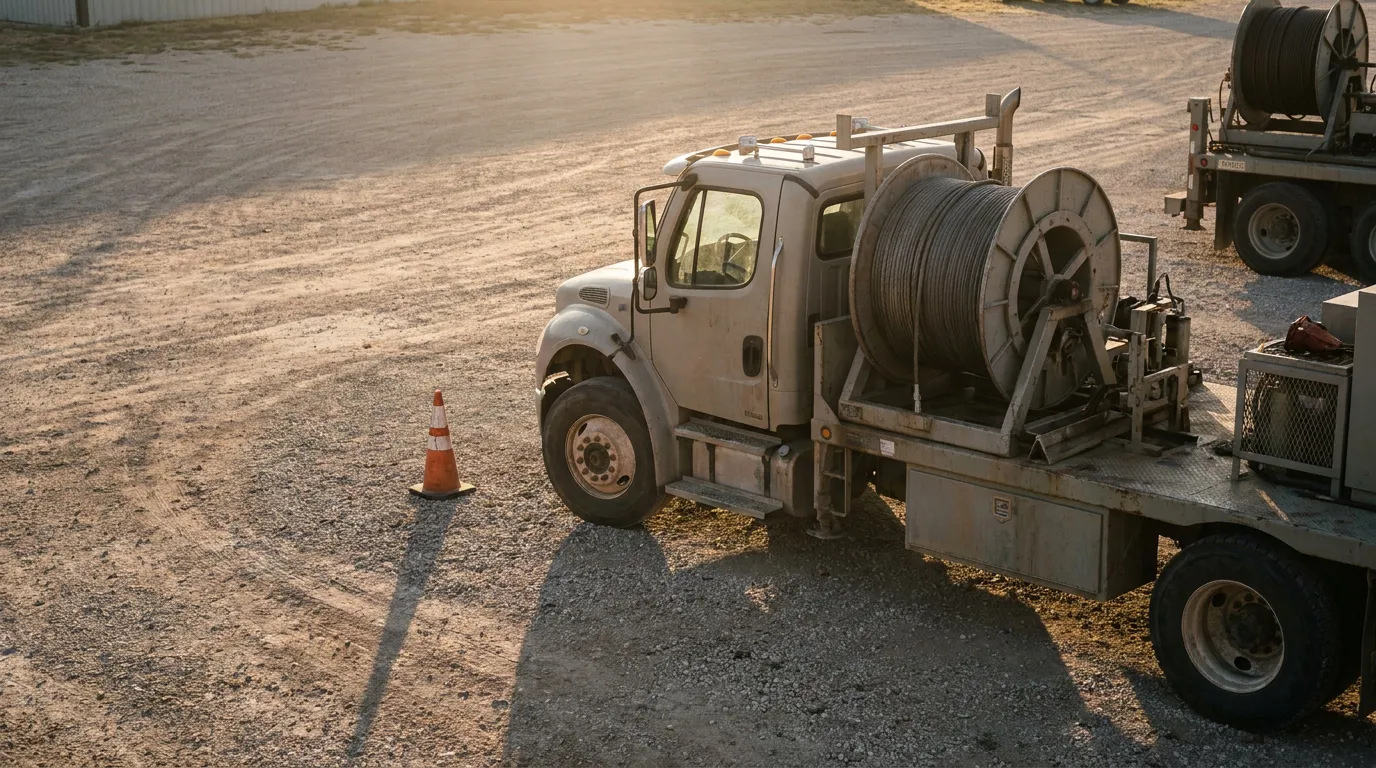
Why That Drive From the Yard to the Well Site May Belong on Your Paycheck
Key Takeaways: Shop-to-rig drive time is generally treated as paid work for Texas wireline crews once the workday has already begun at the yard. Ordinary home-to-shop commuting generally stays unpaid under the FLSA baseline created by the Portal-to-Portal Act, but loading tools, running pre-trip inspections, or attending a JSA at the shop may start the workday and make the drive to the location compensable travel, provided those tasks are integral and indispensable to the job. Contract, custom, or established practice can also support payment even where the default rule would not. Day rate pay can hide these hours because a flat daily figure never moves, which may understate both total weekly hours and any overtime premium owed. Documentation matters, since oilfield payroll records often begin at the rig and ignore yard and windshield time. FLSA claims generally must be brought within two years, or three for willful violations, measured separately for each paycheck, so delay can erase older workweeks.
If you report to the shop, load tools, run safety checks, then drive a company truck to the rig, that drive time is generally treated as paid work under federal wage law. The rule that keeps most morning commutes unpaid usually doesn’t reach travel after your workday has already started. For many Texas wireline hands, the shop is the first duty station, and everything after that stop can look like hours worked. Whether those hours get counted, and whether they push you past 40 in a workweek, depends on how your employer runs the yard.
If you suspect hours are missing from your check, The Lore Law Firm reviews oilfield pay practices for field crews across Texas. Call 866-559-0400 or request a free case evaluation to have your situation looked at confidentially.
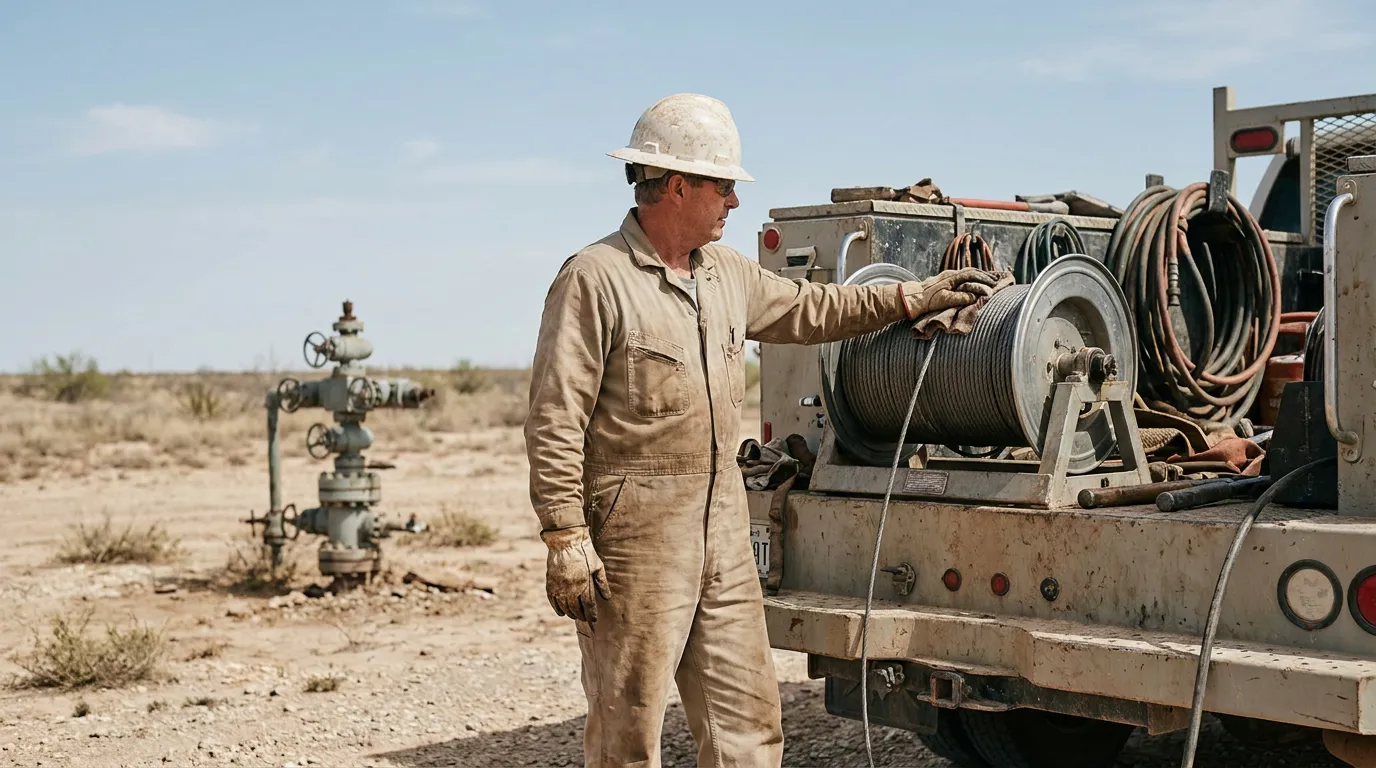
The Default Rule: Your Commute Usually Is Not Paid
Federal law generally starts from a simple baseline: ordinary home-to-work travel is typically not compensable working time. The Texas Workforce Commission’s employment law guide explains that normal commuting between an employee’s home and a regular work site generally does not count as work time under the FLSA, regardless of drive length.
This baseline comes from the Portal-to-Portal Act of 1947, which amended the FLSA nationwide. Because it’s federal law, it applies the same way in the Permian Basin as in Pennsylvania. The regulations treat ordinary commuting, and travel from home to a designated reporting point before the workday begins, as “preliminary” activity outside hours worked. Texas has no separate state overtime statute changing this analysis.
There is an important carve-out. Activities not compensable under the Portal-to-Portal Act may still become compensable by contract, custom, or practice. If your company has historically paid drive time, or a written policy promises it, that promise may matter, though such a claim is often enforced under contract or state wage law rather than FLSA overtime. Courts may look at actual practice, not just what a handbook says.
When Shop-to-Rig Travel Becomes Compensable Travel Time
Once your workday begins, travel between work locations is generally counted as hours worked. The DOL’s guidance on FLSA hours worked rules explains that travel between job sites during the workday generally must be counted. TWC guidance reaches a similar conclusion under the heading of travel that is all in a day’s work.
The pivot point is generally when your first principal activity happens. If the company requires you to report to the shop and perform tasks integral and indispensable to the work, such as gathering wireline tools, loading the truck, attending a JSA, or performing pre-trip inspections, the workday has arguably begun at the yard. Under the continuous workday principle, the drive to the well site after that may be treated as travel between work locations rather than a commute, unless it’s a bona fide off-duty break.
Common Fact Patterns That Favor Payment
-
You must report to the shop or yard before heading to the location, rather than driving straight from home.
-
You perform real work at the shop first, such as loading explosives, rigging up equipment, calibrating tools, or completing paperwork.
-
You drive a company vehicle loaded with equipment because the employer directs you to.
-
You transport other crew members as part of the job assignment.
-
You travel from one well site to another during the same shift.
-
Your employer tracks or controls your route, stops, or arrival time.
Special one-day assignments deserve separate attention. DOL guidance notes that an employee who regularly works at a fixed location but is given a special one-day assignment elsewhere is generally performing work time during that travel, though the employer may deduct time equal to an ordinary commute. Wireline crews normally based at one shop, then sent on a one-off call to a distant location, may fall within that reasoning. Facts drive the outcome, and the analysis can change if the assignment becomes routine.
💡 Pro Tip: Save the dispatch texts. Group chats and dispatch apps often show the exact time you were told to be at the yard, corroborating when your workday started.
How the Rules Compare Side by Side
|
Travel Situation |
Generally Treated As |
Why |
|---|---|---|
|
Home to the shop at shift start |
Generally not paid |
Ordinary commuting under the FLSA baseline |
|
Shop to rig after loading tools |
Often paid |
Travel between work locations after the workday began |
|
Rig to rig during the same shift |
Often paid |
Travel that may be part of the principal activity |
|
Home straight to the well site, no shop stop |
Often not paid |
May be treated as a commute, subject to exceptions |
|
Special one-day trip to a distant location |
Often paid |
Travel for a special assignment may count as work time |
|
Drive time promised by policy or agreement |
May be paid per that promise |
Contract, custom, or practice exception |
Outcomes can shift based on specific duties and employer control, so treat this chart as a starting point, not a verdict.
Why Day Rate Pay Makes Unpaid Drive Time Worse
Day rate pay can hide drive time because the number on your check never moves, no matter how many hours you log. A flat daily amount does not automatically satisfy the overtime requirement for non-exempt employees. Under federal rules, a day-rate employee’s regular rate is generally found by dividing total weekly pay by all hours actually worked, with an additional half-time premium owed for hours over 40, since the day rate is treated as covering straight time for all hours. Every unpaid hour at the wheel can distort that calculation.
That distortion may cut against the worker twice. Uncounted travel hours can make it look like you never crossed 40, and can also change the hours used to compute the regular rate when the employer does concede some overtime is owed. Spending two hours a day driving between yard and location adds up to roughly 10 unrecorded hours a week. Workers paid by the day can review how day rate workers are generally supposed to be compensated to see how the math should work.
Misclassification often travels alongside unpaid drive time. Some operators label wireline hands as independent contractors, issue a 1099, and treat travel as the worker’s own problem. Classification generally depends on the economic reality of the relationship, not the label on the paperwork. If the company sets your schedule, assigns your locations, supplies the tools, and controls your route, employee status may be supportable despite the contract language, though no single factor is decisive.
Building a Wireline Overtime Claim on Drive Time
Documentation often decides these cases, because company time records may start at the rig. Oilfield payroll systems frequently record “on location” times while ignoring yard time and windshield time. When employer records are incomplete, your own reasonable evidence of hours worked may carry real weight, shifting the burden to the employer to rebut it. That’s why writing things down matters.
Records Worth Keeping
Keep a running log with the date, arrival time at the shop, what you did there, when you left for the location, arrival and departure times at the well site, and when you returned to the yard. Photos of the truck odometer, fuel receipts, gate logs, JSA forms, and time-stamped messages all help. Pay stubs and any written travel pay policy round out the picture.
Limits and Realities to Keep in Mind
A few honest limits belong in this discussion. Compensability of travel is fact-sensitive, and courts and agencies analyze it case by case. Reporting to a yard doesn’t guarantee payment if no integral work occurs there, and brief or insubstantial time may be disregarded as de minimis. Some employers legitimately allow workers to drive straight from home to the location, which may remain an unpaid commute. Certain workers, such as some drivers subject to the Motor Carrier Act exemption, may also be exempt from overtime altogether even if their travel counts as work time.
Timing also constrains what can be recovered. FLSA claims generally have a two-year limitations period, extended to three years for willful violations, and the clock runs separately for each paycheck. In a collective action, individual claims typically are not preserved until the worker files a written consent to join, so delay can quietly erase older workweeks. Any DOL administrative complaint process is generally separate from a private civil lawsuit, and one isn’t a substitute for the other. Anyone weighing options may want to review how travel time pay is analyzed under federal standards before deciding what to do next.
💡 Pro Tip: Federal law generally prohibits retaliation against workers who raise wage complaints. If hours or assignments change after you ask about unpaid drive time, note the dates.
What Recovering Wireline Operator Overtime Pay Can Involve
Pursuing overtime pay typically starts with a review of pay records against actual hours, including travel. Counsel generally compares the day rate, workweek hours, recorded start and stop times, and any travel policy to identify whether the regular rate and overtime premium were calculated correctly. Under the FLSA, workers who prove unpaid overtime may be entitled to back wages and, in some cases, an equal amount in liquidated damages, unless the employer establishes it acted in good faith and on reasonable grounds.
Claims may proceed individually or, under certain circumstances, collectively with coworkers in similar roles who choose to opt in. Because yard-reporting practices tend to apply to whole crews, one worker’s question often surfaces an issue affecting many. Results depend on the evidence, employer’s records, and how a court views the specific facts, so no outcome can be promised.
Frequently Asked Questions
1. Does my drive from home to the shop have to be paid?
Generally, no. Normal home-to-work travel is generally not compensable under federal law, even when the drive is long. That may change if you perform required work before or during the drive, or if a policy, contract, or established practice promises oilfield commute pay.
2. My employer pays a flat travel stipend. Is that enough?
Not necessarily. A flat stipend may not equal the overtime owed once travel hours are properly counted in your workweek total, and how the stipend is treated in the regular rate can matter. The FLSA generally requires that all hours worked be included when calculating the regular rate and any overtime premium.
3. What if I drive the company truck home at night?
Under the Employee Commuting Flexibility Act, using an employer-provided vehicle for commuting within the normal commuting area, under an agreement between you and the employer, is generally not paid time by itself. The answer may differ if you’re required to perform work along the way, such as hauling equipment, picking up crew members, or responding to dispatch.
4. I signed an independent contractor agreement. Can I still claim unpaid drive time?
Possibly. Classification generally turns on the economic reality of the working relationship rather than the label in a document, and FLSA rights generally cannot be waived by private agreement. Many field workers labeled as contractors have been found to be employees entitled to overtime, though each situation depends on its own facts.
5. How long do I have to bring a wireline overtime claim?
FLSA claims are generally subject to a two-year limitations period, which may extend to three years for willful violations. Because the clock runs separately for each paycheck and older workweeks can drop off over time, acting promptly may help preserve options.
The Bottom Line for Texas Wireline Hands
Ordinary commuting to the yard generally stays unpaid, but once you report to the shop and begin integral work, the drive out to the rig may be treated as compensable travel time under the FLSA. Day rate pay can make that unpaid drive time easy to overlook, since the flat daily figure never reflects extra windshield hours. Contract, custom, or practice may expand what must be paid, and misclassification as a contractor does not necessarily eliminate overtime rights. Every case turns on how your specific employer schedules, directs, and records your day, and on whether any exemption applies.
If your paychecks never seem to reflect the hours you actually put in, The Lore Law Firm can evaluate your wireline pay practices at no cost to you. Call 866-559-0400 or start your free case review to find out whether your drive time should have been paid.
Disclaimer: This content is for informational purposes only and is not legal advice. Every case is unique, and results may vary. Consult an attorney about your specific circumstances.

Michael Lore
Founding Attorney
Michael Lore is the founder of The Lore Law Firm with over 25 years of experience in labor and employment law. He handles cases ranging from unpaid overtime and class actions to executive contracts and personal injury matters in courts nationwide.
Read Full Bio