


Overtime Pay After a Natural Disaster: Your Rights During Emergency and Recovery Work
When a hurricane, wildfire, or flood strikes, thousands of workers mobilize for cleanup, rebuilding, and recovery—often logging 60-, 70-, or even 80-hour weeks under dangerous conditions. Many assume that emergency circumstances change the rules around overtime pay. They don’t. The Fair Labor Standards Act requires employers to pay time-and-a-half for every hour beyond 40 in a workweek, and no disaster declaration, state of emergency, or employer policy can waive that obligation. Despite this, substantial sums in unpaid wages have been recovered for from disaster recovery employers following major disasters, highlighting recurring overtime and wage violations in recovery efforts. If you are working long hours in the aftermath of a natural disaster, understanding your rights is essential to making sure you are paid what you have earned.
Worked long hours during a disaster response and didn’t receive proper overtime? The Lore Law Firm has helped recovery workers nationwide. Contact us or call 866-559-0400 for a free claim review.
The FLSA Does Not Pause for Natural Disasters
The foundational rule is straightforward: under 29 U.S.C. § 207(a), covered non-exempt employees must receive overtime at one-and-a-half times their regular rate for all hours beyond 40 in a workweek. The Department of Labor’s Fact Sheet #72, which addresses employment and wages during natural disasters, states that these requirements are not subject to waiver during disaster and recovery efforts. No presidential declaration, governor’s order, or employer claim of “emergency circumstances” changes this.
This means whether you are clearing debris after a hurricane, restoring power lines following an ice storm, or gutting flood-damaged buildings, every hour past 40 in a week entitles you to overtime pay. Your employer cannot claim overtime rules are “suspended” during the emergency, and you cannot sign away your right to overtime—any such agreement is unenforceable under federal law.
Who Qualifies for Overtime During Disaster Recovery
Hourly, Day-Rate and Non-Exempt Workers
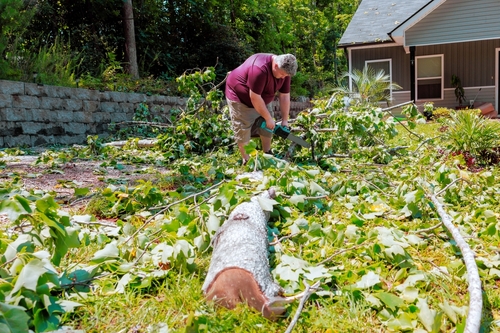
If you are paid hourly, day-rate or classified as non-exempt, the overtime rule applies to you in full during disaster recovery. This includes construction laborers, tree removal crews, roofing workers, utility line technicians, debris haulers, environmental remediation teams, and the countless other roles that form the backbone of disaster recovery operations. As our attorneys explain on our disaster recovery workers’ overtime rights page, the nature of the work does not change the legal obligation—your employer must track every hour and pay overtime accordingly.
Salaried Employees and Disaster-Related Closures
Salaried employees classified as exempt under the FLSA’s executive, administrative, or professional exemptions are not entitled to overtime. However, disasters create unique pitfalls for employers that can inadvertently destroy that exemption. Under 29 C.F.R. § 541.602, if an employer closes operations for less than a full workweek due to a disaster, the exempt employee must still receive their full salary for any week in which they performed any work. Deducting pay for a partial-week closure caused by a hurricane or flood violates the salary basis test and can make the employee retroactively eligible for overtime for the entire period of improper deductions.
Common Employer Violations After a Natural Disaster
Department of Labor investigations and private lawsuits following major disasters have exposed consistent patterns of wage theft. In the years following Hurricanes Irma and Maria, hundreds of investigations were conducted related to disaster recovery and recovered tens of millions of dollars in back wages in Puerto Rico and the U.S. Virgin Islands. The most frequent violations fall into predictable categories.
Misclassification as Independent Contractors
The single most common violation in disaster recovery is misclassifying workers as independent contractors. Employers hand out 1099 forms instead of W-2s, tell workers they are “self-employed,” and avoid paying overtime entirely. The legal reality is that a label on a form does not determine employment status. The DOL applies a multi-factor economic realities test examining who controls the work, who provides tools, and whether the worker has a genuine opportunity for profit or loss. Following Hurricanes Irma and Maria, millions of dollars in back wages were recovered from employers that had illegally classified workers as independent contractors. If your employer controls when, where, and how you perform disaster recovery work, you are very likely an employee entitled to overtime regardless of your paperwork. Learn more on our independent contractor overtime rights page.
Day Rates and Flat Pay That Shortchange Workers
Another common tactic involves paying disaster workers a high-sounding day rate—say $300 or $500 per day—for shifts that routinely stretch to 12 or 14 hours. Employers tell workers the generous rate “covers” overtime. It does not. Under the FLSA, a day rate must be broken down into an effective hourly rate, and overtime must be calculated on top of that for hours beyond 40 in the workweek. A worker earning $300 for a 12-hour day is effectively earning $25 per hour, and hours over 40 that week must be compensated at $37.50. In one enforcement action in Puerto Rico, a roofing contractor agreed to pay substantial back wages to resolve day-rate overtime violations affecting hundreds of employees.
Offering Comp Time Instead of Overtime Pay
Some employers promise workers compensatory time off (“comp time”) in place of cash overtime, claiming they will “make it up later” once the emergency subsides. For private-sector employers, this is flatly illegal. The FLSA’s comp time provision under 29 U.S.C. § 207(o) applies exclusively to state and local government employers. A private company performing disaster cleanup, restoration, or rebuilding has no legal authority to substitute time off for overtime wages, regardless of any agreement with the worker.
Travel Time, Waiting Time, and On-Call Hours During Emergencies
Disaster recovery often involves significant non-task time that employers fail to compensate. Under DOL regulations, travel from a central staging area to a disaster work site during the workday is compensable time that counts toward your 40-hour overtime threshold. If you report to a parking lot at 5:00 a.m. and ride a company bus two hours to a remote site, that travel is work time. Similarly, if you must remain on the employer’s premises or stay close enough that you cannot use the time freely, your on-call and waiting time is compensable. Workers required to don and remove specialized protective equipment—such as hazmat suits or respirators—at the work site are also entitled to compensation for that time, which adds up significantly over a long recovery project.
Frequently Asked Questions About Overtime During Natural Disasters
Can my employer claim overtime rules are suspended during a declared emergency?
No. Neither a federal disaster declaration nor a state of emergency suspends the FLSA’s overtime requirements. The Department of Labor has been explicit on this point in its official guidance. Any employer who tells you otherwise is either misinformed or deliberately violating the law.
I volunteered to help with disaster cleanup through my company. Am I owed overtime?
If you performed work for a for-profit employer, it is compensable time regardless of whether you “volunteered.” The FLSA does not permit employees to volunteer unpaid labor to their for-profit employer. You may genuinely volunteer your time to a government agency or qualifying nonprofit for humanitarian disaster relief without triggering overtime obligations for your regular employer.
How long do I have to file an overtime claim for disaster recovery work?
The statute of limitations for FLSA overtime claims is two years from the violation date, or three years if the employer’s violation was willful. Because disaster recovery work often involves short-term deployments, it is critical to act promptly. Every week that passes could mean lost wages falling outside the recovery window.
What should I do if my employer is not tracking my hours during a disaster?
Keep your own detailed records. Write down your start and end times each day, note any breaks, and record on-call or waiting time. Use your phone to take timestamped photos and save any text messages or emails about your schedule. Federal courts have held that when an employer fails to maintain required records, an employee’s good-faith reconstruction of hours worked may be accepted as evidence.
Are insurance claims adjusters exempt from overtime after a disaster?
A narrow exemption exists for certain major disaster claims adjusters under the Consolidated Appropriations Act. To qualify, the adjuster must earn at least $591 per week on average, perform specific claims evaluation duties, and work for an employer not primarily in insurance underwriting or sales. This exemption lasts two years following the disaster declaration and does not apply to cleanup workers, construction crews, or other recovery personnel.
Protect Your Right to Fair Pay After a Disaster
Natural disasters create chaos, but your right to overtime pay is not negotiable. If you have worked more than 40 hours in a week performing disaster recovery or rebuilding work without proper overtime compensation, you may be owed significant back wages—plus an equal amount in liquidated damages under federal law. The Lore Law Firm has spent over 25 years fighting for workers denied the overtime they earned, recovering more than $100 million nationwide. Our overtime attorneys offer free, confidential case evaluations and work on a contingency basis, meaning you pay nothing unless we win.
Worked long hours during a disaster response and didn’t receive proper overtime? The Lore Law Firm has helped recovery workers nationwide. Contact us or call 866-559-0400 for a free claim review.

Michael Lore
Founding Attorney
Michael Lore is the founder of The Lore Law Firm with over 25 years of experience in labor and employment law. He handles cases ranging from unpaid overtime and class actions to executive contracts and personal injury matters in courts nationwide.
Read Full Bio